8 Old Testament Passages that Changed the World
If you hear the word “Goliath,” what name do you immediately want to pair it with? If someone says “Jonah,” what animal pops into your head? If you hear the word “Commandments,” what number comes to mind?
The Old Testament has shaped and continues to shape our lives in profound ways. 8 Old Testament Passages That Changed the World looks at the many ways culture has treated, mistreated, distorted, and brought to life the most well-known portions of the Old Testament. Joseph Bentz examines these inescapable passages and asks why they continue to have such a grip in every arena of life, from movies to advertising to literature to music.
If these words hold such power, what difference could they make in our own lives if we delved into them even deeper? Explore the familiar scriptures about David, Adam and Eve, Noah, Ruth, Abraham, the Shepherd’s Psalm, Moses, and Jonah—and discover in them new meaning for your life.
12 New Testament Passages that Changed the World
 Is the Bible still relevant? Some may decry the decline of the Bible’s impact in our secular age, but Scripture still exerts a profound influence on today’s culture. Even people who have never opened a Bible know what a Good Samaritan is. People know what the term “prodigal son” refers to even if they have never read Jesus’s parable about him. What is it about these stories and other biblical passages that makes them so enduring and life-changing?
In 12 New Testament Passages that Changed the World, Joseph Bentz explores some of the most probing New Testament scriptures and demonstrates their ability to touch all types of people.
These twelve passages and others have transformed art, literature, music, film, law, popular culture, the church, and countless individual lives. The Holy Spirit’s life-giving breath continues to infuse them with holy power even today.
Nothing is Wasted
 Redemption is so important to God that He has scattered hints of it throughout the universe. A quick glance at the world may reveal more trouble than redemption. Terrorists blow up innocent children. Disease sweeps through poor nations and wipes out hundreds, their bodies tossed aside. Politicians posture, blame and ignore intractable problems.
Life may be seen as a series of losses. We lose loved ones, our youth, our decaying possessions, and eventually our lives. Despite this pervasive pattern, a countervailing force remains at work in the world. In the midst of all this loss beats a relentless pulse of redeeming love and good that thrusts itself through the chaos and pain. It does not obliterate the pain, but neither does it allow the pain to be wasted. It wrenches good from it, like a gold nugget pried from deep underground.
Nothing is Wasted finds hints of redemption in the least expected places—in dirt, in whale carcasses, in death, in suffering, in fairytales, in frustrations, and in the stories of people’s lives.
Dreams of Caladria
 Through the breaking ice, in a vortex of brilliant light, energy, and sound, Jeremy plunges into a dangerous and mysterious new world. It is a world where music is absolutely prohibited – on pain of death. And Jeremy breaks that law when he arrives in Persus Am in a swirling cloud of light and music. A stranger in a strange land, he does not know why he has been sent. But it soon becomes clear that he must risk everything to help his new friends in the weary and war–torn world. From the vast Gray Desert to the jeweled palace of Persus Am, the forbidding Rock of Calad to the fabled land of Caladria, Jeremy finds himself in the midst of horrifying evil and heroic goodness. As he searches for an answer to why he is here, he must face the truth that is written on his own heart.
Pieces of Heaven: Recognizing the Presence of God
 Most Christians don’t intend to quench the Spirit. They wantGod’s presence in their lives, but they end up ignoring him anyway. Why?
In an increasingly secularized and frenzied culture, it’s easy to leave God out of our conversations and thoughts—at work, at school, in social settings, and unfortunately sometimes even at church. But our lives can be transformed when we remove him from that small place on the shelf where we sometimes keep him and let him permeate our lives—our work, our play, our music, our relationships, our long walks, our mealtimes, our times of fear, our journeys through suffering.
God in Pursuit: The Tipping Points from Doubt to Faith
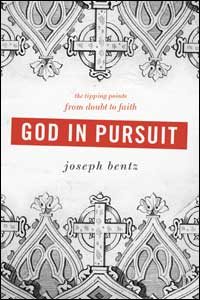 God in Pursuit: The Tipping Points from Doubt to Faith identifies and celebrates the sparks that allow faith to catch fire in the lives of new believers who were once hostile or indifferent to God. It also examines the ways those tipping points operate throughout the Christian life as people confront spiritual crises or grapple with questions that did not arise at the time of conversion.
What is the turning point that causes a curious journalist and atheist to walk into a church and be converted the first time she takes communion? At what point is a lifelong atheist and head of one of the greatest scientific breakthroughs of the twentieth century persuaded to turn to Christ? What leads a woman who has a Mafia contract on her life and who appeared on the FBI’s Ten Most Wanted list to become a Christian in prison and then start a national outreach ministry that has touched the lives of thousands of children? This book looks at these and many other conversion stories to find the patterns that allow people to move from disbelief to faith.
When God Takes Too Long, DVD + Book: Lessons for Faith Communities
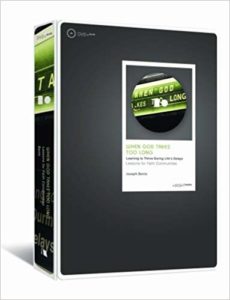 When God Takes Too Long examines the mysteries of God’s timing and shows Christians how to thrive in the midst of one of life’s greatest frustrations—waiting. The book offers those who have been discouraged by a life of waiting a chance to alter not only their perspective on waiting, but also their actions in response to it, transforming this frustration into a positive force that will enrich and change their lives.
When God Takes Too Long addresses:
- How not to wish (or wait) our lives away
- How to better understand the nature of time
- How to master the discipline of waiting
- How to cast off the boundaries of time to view our lives from an eternal perspective
This resource includes a copy of the book and a DVD containing six video lessons in which the author introduces various chapters. It is ideal for use in small group studies. The DVD contains a printable Leaders Guide containing questions and other activities for groups to use.
Silent God
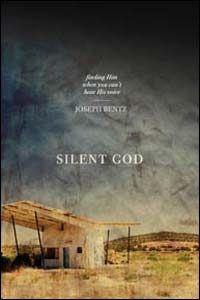 As Christians, many of us experience times in our spiritual lives when it feels like God is silent. For reasons we don’t understand, we’re unable to sense His presence, feel His comfort, or hear His direction. And although we may be following Him as best we know, our spiritual lives feel dry and He seems more distant than ever.
In Silent God, Joseph Bentz addresses the pain and bewilderment many feel when they can’t hear God’s voice. He examines the possible influences that can unknowingly invade our lives and block our ability to hear God. Television, radio, iPods, cell phones, internet, email, traffic, and crowded schedules contribute to our noisy world. Every moment is bombarded by noise, both external and mental, that clutters our thoughts and causes us to lose the ability or desire to settle down and really commune with and listen to God. Bentz explains how the accumulation of all this noise can contribute to God’s silence in our lives and shares valuable and practical ways to control the noise so we can hear God once again. He also explores ways God may use silence as a means of working out His spiritual purposes in our lives. Bentz shows how sometimes our spiritual routines become spiritual comforts that, instead of pointing us to God, end up replacing Him. He offers insight and understanding for persevering through the silence and reassures us that doing so will result in essential spiritual growth and a deeper commitment to Christ.
Silent God reveals a new understanding of the mystery and power of God and shows how to find Him through the silence and emerge with a greater sense of purpose and a deeper connection with Christ and His love.
A Son Comes Home
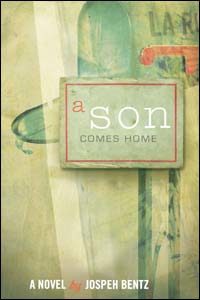 It took the news of his father’s illness to bring him home for the summer. After fleeing Indiana following the tragic death of his idolized older brother, Chris LaRue struggles to set aside his bitterness and instead renew the fragmented relationships abandoned two years earlier. But he discovers that his brother’s presence still echoes through the house and time has not healed the wounded.
Battling a deep sense of loyalty to his brother, Chris tries desperately to patch together his family. But new challenges rock its foundation and threaten to undo their fragile progress. Chris yearns for a future free from the past–will it require revealing the betrayal his brother took to the grave?
When God Takes Too Long
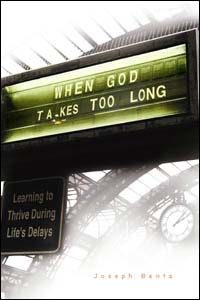 Why does God seem so slow to act? Why must we spend so much of our lives waiting? Joseph Bentz’s latest book, When God Takes Too Long, examines the mysteries of God’s timing and explores how Christians can learn to thrive in the midst of one of life’s greatest frustrations. Read more about this book.
What Others are Saying About When God Takes Too Long: Learning to Thrive During Life’s Delays:
“Joseph Bentz’s message clearly outlines the benefit of waiting on God, and the stark reality of seeking understanding during the journey. In a world in which people write more than they reflect, it’s refreshing to find a text that represents the author’s firsthand struggle to find answers. In a style that mixes Randy Alcorn’s informed passion and John Ortberg’s poignant practicality, contemporary and biblical stories merge to articulate the principles of waiting effectively.” – Dr. Jerry Pattengale, author of Str8T@lk: Clear Answers about Today’s Christianity, speaker, academic administrator, Indiana Wesleyan University
Song of Fire
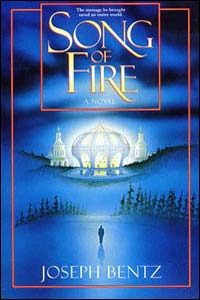 Through the breaking ice, in a vortex of brilliant light, energy, and sound, Jeremy plunges into a mysterious new world.
It is a world where music is absolutely prohibited–on pain of death. And Jeremy breaks that law when he arrives in Persus Am in a swirling cloud of light and music. A stranger in a strange land, he does not know why he has been sent here. But it soon becomes clear that he must risk everything to help his new friends in this weary and war-torn world.
“Bentz uses words the way a builder uses bricks or a jeweler uses valuable stones. There is no excess. Each word is carefully placed. . . .With Song of Fire, readers have a rare opportunity to read and enjoy a book that their children’s children may discover with the same sense that the book is something special. I can’t resist: I think that readers of Song of Fire are experiencing the birth of a classic.” – Christian Book Review
At Close of Day
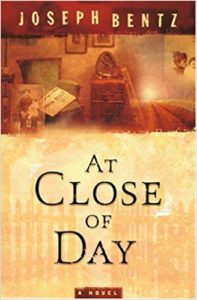 Hugh Morris had a secret–and he spilled it in a moment of confusion from his hospital bed. After much arm-twisting by his daughters, the story is slowly leaking out. But secrets that have been concealed for nearly a half century are not revealed without significant grief and bitterness. As each family member begins rewriting their family’s history and facing the future the truth has thrust upon them, they must pursue reconciliation or risk being divided forever.
“Bentz has created a fascinating exploration of the complexity of two generations of family as they fight for reconciliation. He tells the story of a family forced to re-write its history when a traumatic secret is thrust upon them. Each character is well-developed, giving the reader an intimate view on the life of a modern family.” – CurledUp.com
- Bethany House, 2003, 0764222090
- Rated “phenomenal” by Romantic Times magazine, their highest rating
- Chosen for Good News Book Club
- Purchase At Close of Day
Cradle of Dreams
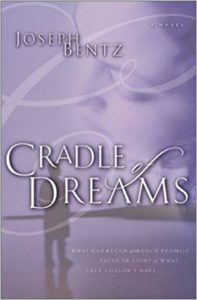 The medications brought on depression, irritability, and insomnia–misery beyond what she had imagined. Yet Laura is willing to endure that and more, if only it will lead to a child. But hope fades with each new phone call–each prognosis another blow to endure. Unwilling to give up until she has seen the last expert on earth, Laura becomes consumed with overcoming her empty arms. But why is it that she seems to struggle alone, while her husband drags his heels at every turn? Isn’t this their dreams they’re trying to fulfill?
Humiliation. For Paul, that word describes the whole unpleasant process. And for what? To achieve a dream no one can guarantee? He and his wife have rewarding careers, common interests and hobbies, nieces and nephews to enjoy. Now all that was good and right and comfortable about their marriage has faded with the realization of this one strike against them. Against him. Paul, feeling he owes his wife something that can never be repaid, simply wants to see Laura smile again. But at what cost?
- Bethany House, 2001, 0764222074
- “A book that never blinks in its thought-provoking look at marriage in this story of love, loss, hope and compassion.” – Reader to Reader
- “You will find that you will not be able to put this book down. It will stay with you long after you are finished reading it.” – Christian Bookshelf
- Purchase Cradle of Dreams